When to Plant Pumpkins, Squash, and Corn in North Idaho
North Idaho’s short, changeable spring can make it hard to know whether pumpkins, squash, and corn are ready to go outside. Plant too early and cold soil or a late frost can stall young plants; wait too long and slow growth may shorten the harvest window. The best approach is to use weather, soil, and crop maturity—not a fixed calendar date—to choose your planting time.
The right planting window depends on more than the calendar
Pumpkins, squash, and corn are warm-season crops. They need more warmth than hardy spring vegetables, so an early sunny spell is not, by itself, a reliable signal to plant. Cold ground can slow germination and root development, while a frost can damage or kill tender seedlings. In North Idaho, those risks can linger after the garden looks ready.
Instead of choosing a date in advance, look for a stretch of conditions that supports steady growth. Consider whether frost is still a realistic threat, whether the planting area has warmed, and whether the forecast is likely to stay mild. Your own yard matters, too: a sheltered bed that warms in the sun may be ready before an exposed site, while a low spot may hold cold air longer.
Use local frost information as a planning aid, not as a promise. Average frost dates describe probabilities; actual weather varies from year to year. For help understanding local conditions, see Idaho Frost Timing and Growing Seasons: A Regional Overview and Understanding Freeze Risk Across Idaho Microclimates. If you are weighing a sudden warm spell against the possibility of another cold night, Plant Now or Hold Off? Evaluating Sudden Freeze Risks in Idaho offers a useful way to think through the decision.
A practical readiness check includes:
- Frost risk: Is a cold night still plausible in the forecast for your location?
- Soil condition: Is the ground workable rather than saturated, sticky, or cold?
- Soil warmth: Does the planting area feel like it has begun to warm consistently, rather than just on a sunny afternoon?
- Shelter: Is the bed protected from cold air and strong wind, or is it exposed?
- Season length: Will the crop have enough favorable growing weather to mature before autumn cold?
These checks are more useful than treating a date on a calendar as a guarantee. A planting calendar can help organize seed starting and garden tasks, but local conditions decide whether the plan is ready to move outdoors. For broader timing context, see Idaho Vegetable Sowing Guide: Spring Timing for Cool and Warm Crops and Idaho Vegetable Planting Calendar: What to Sow and When.
It also helps to separate two questions: when to plant, and whether a particular crop can mature in your garden. A late planting may establish successfully but still leave too little warm weather for a large, fully mature fruit or a good corn harvest. Choosing the right planting window means balancing protection from spring cold with enough growing time before fall.
How pumpkins and squash differ from corn
Pumpkins and squash belong to the same broad crop group, but their growth habits and maturity needs vary. Summer squash is generally harvested while the fruit is young and tender. Winter squash and pumpkins are grown for mature fruit, so they need enough favorable weather for the fruits to size up and develop sound skins before autumn frost becomes a concern.
University of Idaho Extension notes that winter squash need a long growing season and frost protection in the fall. That makes variety choice and planting readiness especially important: getting the crop into warm, workable conditions early in its safe window can help, but putting it into cold soil too soon may set it back rather than give it a useful head start.
Corn has a different planting pattern. It is usually sown directly where it will grow, rather than transplanted as a large seedling. That means it depends on suitable outdoor soil conditions at planting. It also needs a sufficiently long spell of warm weather to grow and produce ears. If your garden has a particularly short or cool season, the crop’s expected maturity time matters as much as the date you sow.
| Crop group | What matters most for planting | What to watch later |
|---|---|---|
| Pumpkins | Wait for settled conditions that support warm-season growth; avoid exposing young plants to frost | Allow enough growing time for fruits to mature before fall cold |
| Summer squash | Plant when the bed is ready for tender warm-season growth | Harvest is usually aimed at young, tender fruit |
| Winter squash | Match the crop’s maturity needs to your available season | Protect ripening fruits from fall frost |
| Corn | Sow directly once outdoor conditions are favorable | Allow time for plants to grow and ears to develop |
The table is a decision aid, not a date chart. North Idaho gardens differ in elevation, exposure, soil, and cold-air drainage, so the same planting date can work in one yard and fail in another. For an explanation of how elevation changes local timing, read How Elevation Changes Idaho Frost Dates and Microclimates. If your garden is in a colder or higher site, High-Altitude Sowing Schedules for Short Mountain Summers can help you think about season length.
Crop labels and seed packets can help you compare maturity expectations, but they cannot account for every local condition. A crop with a shorter stated maturity period may be a better fit than one that needs a long, consistently warm season. Still, maturity information is an estimate, not a guarantee; cool weather, poor establishment, or limited sun can delay development.
A useful way to plan is to work backward from the harvest you want. For pumpkins and winter squash, think about how much time the plant needs to produce and ripen fruit before fall cold. For corn, consider the maturity information for the seed and whether your site typically stays warm enough for the crop to develop. If your garden’s warm season is uncertain, it can be sensible to grow fewer plants or choose crops with less demanding maturity needs rather than sowing a large area late.
Direct sowing, indoor starts, and transplanting
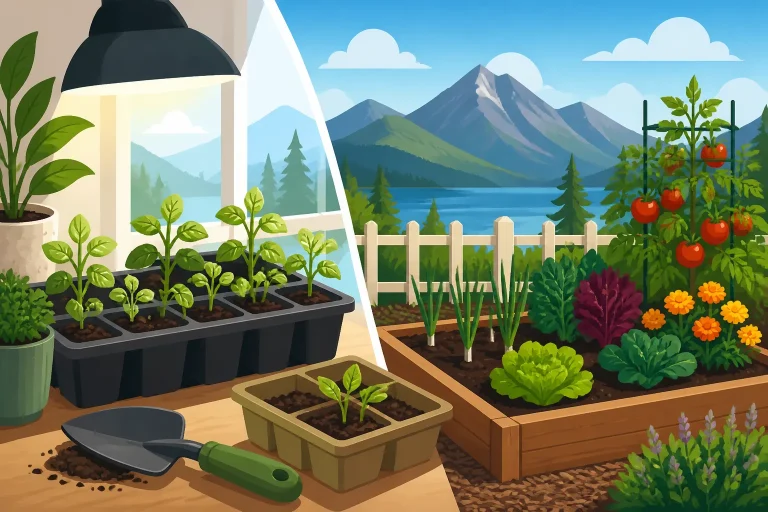
Pumpkins and squash can be started indoors or sown directly in the garden. Each method has trade-offs. Indoor starting can give a plant a head start, but seedlings must be handled carefully and moved outside only when conditions are suitable. Direct sowing avoids transplant stress and keeps roots undisturbed, but it depends on outdoor soil and weather being ready.
Indoor starts are most helpful when they are timed to avoid becoming oversized before outdoor planting is safe. A seedling that waits too long in a small container may become stressed or difficult to transplant. When moving young plants outside, acclimate them gradually to sun, wind, and cooler nights. This transition is called hardening off. It reduces the shock of moving a sheltered seedling directly into outdoor conditions.
Corn is usually best treated as a direct-sown crop. Its roots are easily disturbed, and planting it in the bed where it will grow avoids the extra step of transplanting. For pumpkin and squash seedlings, keep the root ball intact during transplanting and minimize disturbance. If the seedlings are not ready for outdoor conditions, waiting is better than placing them in a cold bed simply to keep to a schedule.
Direct sowing can make sense when:
- The garden soil has warmed and is workable.
- The forecast is not pointing to a likely frost.
- The crop has enough time to mature in your location.
- You can keep the planting area evenly moist during establishment.
Indoor starting can make sense when:
- Your growing season is short and a carefully timed head start could help.
- You can provide bright light and enough room for healthy seedlings.
- You can avoid holding plants indoors until they become overgrown.
- You are prepared to harden them off before planting.
For a more detailed comparison of the approaches, see Direct Sowing vs Indoor Seed Starting for Idaho Gardens. If you plan to start seedlings indoors, Starting Warm-Season Seedlings Indoors and Hardening Them Off covers the transition to outdoor beds. The general timing question is also addressed in Planning Indoor Seed Starting Dates by Average Final Spring Frost.
A temporary cover may help shield young plants from a brief cold spell, but it should not be treated as permission to plant into persistently cold conditions. Covers can also trap heat during sunny weather, so they need to be managed according to the cover’s instructions and changing conditions. For more on choosing protection, see Which Idaho Garden Crops Need Row Covers During Spring Frosts? and Using Hot-Caps and Paper Covers on Cold Idaho Spring Nights.
Before planting, make sure the bed is prepared and the soil drains well. A waterlogged planting area is not a good substitute for a warm, workable one. If your soil tends to stay dense or wet, Improving Compacted Clay Garden Ground in Southwest Idaho and Managing Deep Root Drainage for Heavy Idaho Vegetable Soils may help you identify the issue before sowing.
Choosing a site and managing cold pockets
A warm-season crop needs a site that supports more than sunlight. Look for a garden area with ample direct sun, room for mature plants, and convenient access to water. Pumpkins and many squash spread across the ground, so they can shade or crowd neighboring crops if the planting plan does not account for their growth. Corn also needs enough room for a productive planting area and can shade shorter plants nearby.
Avoid assuming that all parts of your yard share the same planting window. Cold air can settle in low spots, and fences, buildings, slopes, or dense vegetation can affect how air moves. A garden that warms quickly in the afternoon may still experience colder nights than a nearby protected bed. If frost repeatedly affects one part of your yard first, treat that area as a higher-risk location.
A few site decisions can reduce avoidable setbacks:
- Favor a sunny, sheltered area. A site with good sun and protection from harsh wind can support more even growth.
- Avoid known frost pockets. A low, enclosed area may hold cold air. Use a warmer part of the garden for the most frost-sensitive crops.
- Leave room for spreading plants. Plan where vines can grow so they do not block paths or overwhelm neighboring beds.
- Consider soil drainage. Wet soil may remain slow to warm and can make planting difficult.
- Keep water access practical. Young plants need consistent attention as they establish, and a convenient source makes that easier.
If you are still deciding where a garden bed should go, Vegetable Garden Bed Placement: Sunlight, Access, and Heat provides a useful site-planning framework. For raised-bed placement and exposure, see Where to Place Raised Beds for Sun, Water Access, and Shelter. These considerations matter even more when a yard has noticeably different warm and cold zones.
Protecting plants from frost is not the same as making an unsuitable site suitable. Covers may reduce exposure during a short cold event, but they do not provide the steady warmth needed for growth in persistently cold conditions. If you are deciding whether a cover is enough for a particular forecast, compare the crop’s vulnerability and the expected conditions, and be ready to postpone planting if risk remains high. Protecting Transplants When False Spring Turns Freezing in Idaho discusses the problem of planting during a misleading warm spell.
Cucumbers are very sensitive to frost, and trellising can suit small or confined garden spaces, according to University of Idaho Extension. Although cucumbers are not the focus here, that frost sensitivity is a useful reminder that warm-season crops should not be treated like hardy spring greens. A protective structure can help manage space, but it does not eliminate the need to wait for suitable planting conditions.
A practical planting plan for North Idaho
A flexible plan is easier to adjust than one built around a single date. Start by deciding which crops you want, then check their expected maturity and your garden’s local risks. Keep a few possible planting periods in mind rather than making every decision weeks in advance.
Before sowing, review seed information for maturity expectations and growth habit. Decide whether to start pumpkins or squash indoors or sow them in place. Choose the warmest practical bed, and make sure it has enough space for vines. For corn, decide where a direct-sown planting will receive sunlight without shading crops that need it.
As spring approaches, monitor the forecast and garden soil. Watch for patterns rather than reacting to one warm afternoon. If the soil remains cold or wet, hold off. A delay can be less damaging than sowing into conditions that slow establishment. Use your nearest local station as a reference, but remember that your yard may differ from the station’s location. Finding Freeze Dates for Your Nearest Local Idaho Weather Station and Using Local Weather Station Freeze Tables for Spring Planting can help you interpret local information.
When the bed is ready, sow or transplant carefully. Label the planting so you can keep track of what went where. Water the bed as needed to support establishment without leaving the soil saturated. If using transplants, give them time to adjust to outdoor sun and wind rather than moving them abruptly from a protected indoor setting.
After planting, keep checking for cold forecasts and changes in plant growth. A newly planted seed may take time to emerge, especially if conditions are cool. Avoid assuming that poor emergence means the seed has failed until you have considered soil temperature, moisture, and the time since sowing. If seedlings appear weak, check whether they are getting enough light and whether the bed is staying too wet or drying out.
As the season progresses, keep the crop’s harvest needs in view. A plant may look healthy while still needing time to produce mature fruit or ears. For pumpkins and winter squash, plan for the fruit to finish ripening before fall frost. If cold weather approaches while fruits are still developing, use appropriate protection and avoid damaging vines while handling them. For broader fall planning, see Protecting Ripening Winter Squash from Early Idaho Autumn Cold and Fall Vegetable Gardening in Idaho: Crops That Survive Frost.
If you are planting later than planned, do not assume that every crop is equally likely to succeed. Compare the remaining warm period with the crop’s maturity expectations, and consider whether a smaller planting or a quicker-maturing option is more realistic. Can Late Idaho Summer Planting Still Give a Fall Harvest? offers a way to evaluate late-season choices without treating every crop as interchangeable.
The most reliable approach is to keep the plan responsive. Planting times differ across North Idaho, and a sunny, sheltered garden can behave differently from an exposed or elevated one. Use frost risk, soil warmth, site conditions, and crop maturity together. That combination gives pumpkins, squash, and corn a better start than simply choosing the earliest date that seems possible.
Frequently Asked Questions
Can I plant pumpkins as soon as the weather turns warm?
Not necessarily. A warm afternoon does not confirm that the soil has warmed or that frost risk has passed. Check local conditions and wait until the planting area can support tender, warm-season growth.
Should I start pumpkins or squash indoors?
Either indoor starting or direct sowing can work. Indoor starts may offer a head start, but they need enough light and should not be held indoors until they become overgrown. Direct sowing avoids transplant disturbance but requires suitable outdoor conditions.
Is corn a good crop for a cool North Idaho garden?
It can be, provided the selected crop has enough time and warmth to develop in your site. Check seed maturity information and consider how long your garden usually stays warm before fall cold.
Can row covers make early planting safe?
A cover may help protect plants from a brief cold event, but it does not replace suitable soil and weather conditions. Follow the cover’s directions and postpone planting if cold conditions are likely to persist.
Sources
- University of Idaho Extension (checked November 15, 2026)
Disclaimer
This article is for general informational purposes only and does not constitute professional advice. Laws, prices and regulations vary by location and change over time. Consult a qualified professional for guidance on your specific situation. Idaho Gardening Guide is not a government agency and is not affiliated with any university extension, state department of agriculture or other government agency.