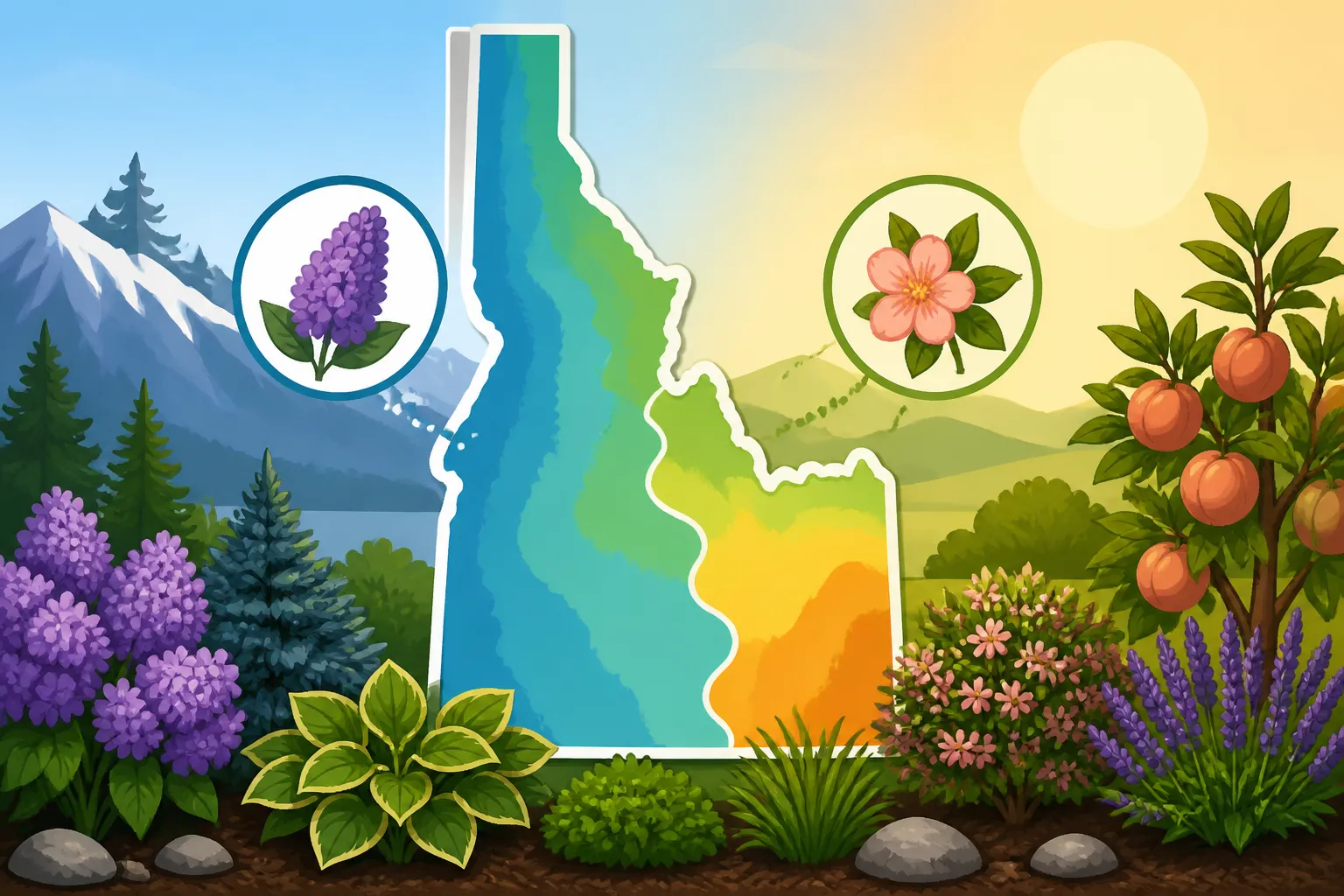
Is Your Yard Zone 6b or 7a? Reading Half Zones Across Idaho
A yard labeled 6b on one map and 7a on another can make plant shopping feel like guesswork. The difference matters, but it is only one clue about winter survival—not a complete planting schedule or a promise about how a plant will perform in a particular bed. Here’s how to read the half-zone labels, investigate a boundary, and use the result without letting it outweigh your yard’s actual conditions.
What 6b and 7a mean on a hardiness map
The USDA Plant Hardiness Zone Map is designed to help gardeners compare the winter cold a location may experience with the cold tolerance of perennial plants. A zone label is useful when a plant listing gives a hardiness range, but it is not a complete description of a garden. It does not tell you when to sow vegetables, when the last spring frost will occur, or whether a sunny, sheltered bed will behave like a nearby exposed one.
According to the USDA Agricultural Research Service, the map displays 10-degree F zones and 5-degree F half zones. The USDA Agricultural Research Service explains that half zones include A/B subdivisions to indicate more specific temperature ranges at a location. Those subdivisions are why a map can show 6b on one side of a boundary and 7a on the other, rather than giving every nearby place the same broad label.
For a gardener comparing 6b and 7a, the practical distinction is that the map places the two labels in neighboring half-zone categories. That distinction can help narrow down whether a perennial is a plausible choice, especially when a nursery label lists a specific cold limit. It does not mean every plant that suits 7a will fail in 6b, or that every plant suited to 6b will thrive in either zone. Plant performance depends on more than the map category.
It also helps to separate a plant’s hardiness from its growing-season needs. A plant may tolerate winter cold but still need a longer warm season, more sun, or different soil conditions to flower or produce well. Conversely, a vegetable that grows quickly in summer may not need the same winter survival information as a woody shrub that remains in place for years. For garden timing, a hardiness label is not a substitute for frost information. See Idaho Frost Timing and Growing Seasons: A Regional Overview for the separate question of seasonal timing.
Think of the half-zone label as a useful first screen. It can flag a possible cold-stress concern and prompt a closer look at a plant’s requirements. It cannot determine the right plant for a specific spot by itself. A 6b or 7a label is a map interpretation, not a guarantee for every bed, slope, container, or sheltered corner on a property.
Why a yard near the 6b and 7a boundary may show different labels
A boundary on a map is a cartographic division, not a visible line in the soil. A yard close to that division may appear in one half zone on one map view and in the neighboring half zone when the view, map source, or location estimate differs. That can happen without the yard itself changing. The first step is to check what location the map is actually displaying and whether it is showing a broad area or a more precise point.
ZIP-code lookups can be useful for an initial estimate, but a ZIP code covers an area, not a single garden bed. A result tied to a postal area should not be treated as an exact reading for a house, much less for a particular corner of the yard. Use How to Look Up Your Idaho Hardiness Zone by Five-Digit ZIP Code as a starting point, then compare the result with the map around the property and consider local exposure.
Look beyond the label
A map’s color boundary can make two places look sharply different, while actual growing conditions transition across the landscape. In Idaho, differences in elevation, slope, exposure, and local terrain can matter to a gardener assessing a site. A lower pocket where cold air settles may behave differently from a nearby slope, while a sunny, sheltered spot may offer conditions unlike an open, wind-exposed area. These are yard-level factors to evaluate, not reasons to assign a hardiness zone to a specific address.
Even within one property, conditions are not necessarily uniform. A bed against a building, a low spot, and an exposed garden edge can each have different shelter and cold-air exposure. A zone label cannot describe all of those microclimates. If the map result seems inconsistent with what you observe, consider the site itself rather than assuming that one label perfectly captures every part of the yard. Understanding Freeze Risk Across Idaho Microclimates explains why local cold patterns deserve attention alongside regional map readings.
Elevation is another reason nearby gardening conditions can differ. It can influence local temperatures and the length or reliability of a growing season, but it should not be used alone to assign a zone. For a closer look at that relationship, see How Elevation Changes Idaho Frost Dates and Microclimates. The key is to combine map information with what you know about the exposure and terrain around your garden.
Treat a boundary as an uncertainty, not a contest
When one lookup suggests 6b and another suggests 7a, it is tempting to keep searching until one label feels definitive. A better approach is to recognize that the yard is near a mapped transition and make choices that allow for some uncertainty. For plants where a cold winter would mean losing a long-lived investment, favor a selection with a comfortable margin rather than choosing one that only just meets the more favorable label.
That does not mean avoiding every plant associated with 7a. It means thinking about the cost of being wrong and the protection or flexibility available. A small annual planting is easy to change. A permanent shrub or tree takes more time and effort to replace. When the map result is borderline, the plant’s stated range, site conditions, and the consequences of winter injury all matter.
If a map lookup returns a neighboring label from what you expected, check whether the location pin is where you intended, whether you are looking at the current map, and whether a broad ZIP-code result is being mistaken for a yard-level measurement. If you still see a boundary nearby, record the uncertainty in your planting notes rather than forcing the yard into a single label with false precision.
How to use the half-zone result when choosing plants
A hardiness label is most useful when compared with the cold tolerance listed for a plant. Start with the plant’s requirements, then ask whether the map result and your site make that choice reasonable. Do not treat the label as the only test. A plant can be within its listed range and still struggle in a poorly matched site, while a protected garden area may perform differently from an exposed one.
For shrubs, trees, and other perennials that remain outdoors through winter, winter hardiness deserves particular attention because the plant cannot be moved away from the cold once established. For annual flowers and vegetables that complete their growing cycle within a season, hardiness zone may be less useful for deciding when to sow or transplant. Seasonal frost timing, soil conditions, and the plant’s growth requirements are usually more relevant to those decisions.
| What you are deciding | How the half-zone label helps | What else to consider |
|---|---|---|
| Whether a perennial may survive winter | Compare the plant’s listed cold tolerance with the map label | Exposure, shelter, soil drainage, and uncertainty near a boundary |
| Whether to plant a tree or shrub permanently | Identify a possible winter-hardiness concern before planting | Long-term site fit and the cost of replacing a damaged plant |
| When to sow a vegetable | Provides little direct timing information | Frost risk, soil conditions, and crop-specific timing |
| Whether a plant will thrive in a bed | Offers a broad regional clue | Sun, wind, moisture, soil, and local cold pockets |
| Whether a container plant can stay outdoors | May help assess general winter risk | Containers can experience different conditions from in-ground beds |
Read plant labels as ranges, not promises
If a plant is listed as suitable for a range that includes the map label you found, that is a reason to consider it, not a guarantee. The plant still has to suit the site’s light, moisture, soil, and exposure. A label is a screening tool that helps narrow options; it cannot account for all the conditions in a particular garden.
If the plant is recommended for a warmer half zone than the one you are considering, decide how much risk is acceptable. A sheltered location may be worth considering for an experimental planting, but shelter should not be treated as proof that a plant will survive. For a major landscape choice, a more cold-tolerant alternative may be the more reliable option. Choosing Resilient Idaho Landscape Shrubs for Winter Winds can help when the decision involves shrubs and exposure, while Choosing Vegetable Varieties for Idaho’s Challenging Climate is more relevant to vegetable selection.
The reverse also applies: a plant rated for colder conditions may be hardy enough for winter but still fail to flourish if other needs are wrong. A label does not guarantee vigorous growth, flowering, fruiting, or a good harvest. Match the plant to the complete site rather than choosing it by zone alone.
Do not use the zone label as a planting calendar
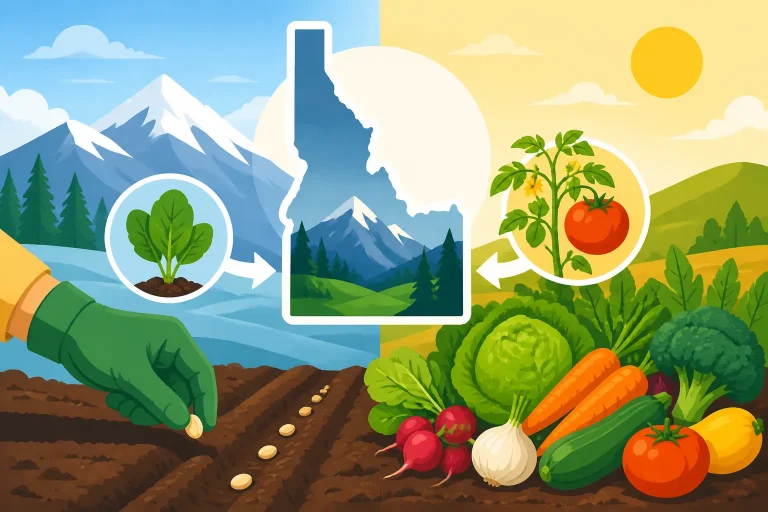
A half-zone describes a cold-hardiness category; it does not give a calendar date for planting. In particular, it cannot tell you when a spring freeze is likely to occur in your yard, or when the soil and weather are suitable for a particular crop. A warm-season vegetable and a winter-hardy shrub ask different questions of a gardener, even if they are going into the same property.
For vegetable timing, use crop-specific guidance and local frost information rather than trying to convert 6b or 7a into a sowing date. The Idaho Vegetable Planting Calendar: What to Sow and When is a more relevant place to begin for crop timing. For a bed that is especially exposed or vulnerable to a sudden cold spell, Plant Now or Hold Off? Evaluating Sudden Freeze Risks in Idaho addresses the separate decision of whether current conditions make planting a poor bet.
This distinction prevents a common planning mistake: assuming a warmer-looking zone label automatically means all crops can go outdoors sooner. Hardiness and freeze timing are related to different decisions. Keep them separate in your notes and compare the correct type of guidance with the plant you are growing.
A practical way to check your zone and make a decision
You do not need to resolve every map discrepancy before you can plan a garden. You do need a consistent process: check the map location, understand the uncertainty, and use the result alongside the requirements of the plants and the conditions on your property.
- Start with a location lookup. Use a ZIP-code lookup as a broad starting point, not a precise reading for a bed. Confirm that the location shown corresponds to the area you mean to check.
- Inspect the map near the result. See whether the yard appears close to a half-zone boundary. A location near a boundary deserves more caution than a result that is clearly away from one.
- Compare more than one view if labels conflict. Check that the maps or lookups are using the same kind of location information. If they still differ, record the yard as near a boundary rather than pretending the discrepancy is resolved.
- Assess the planting site. Note whether it is sheltered or exposed, on a slope or in a low pocket, and whether nearby buildings or terrain affect its conditions. Do not assume one yard-wide label applies equally to every bed.
- Check the plant’s requirements. Compare its winter-hardiness information with the likely zone, then review its needs for sunlight, soil, moisture, and growing-season conditions.
- Choose according to the consequences. For a permanent plant that would be difficult to replace, choose more conservatively when the map label is uncertain. For a small or temporary planting, you may be more willing to test a borderline choice.
- Keep timing separate. For outdoor sowing or transplanting, consult frost and crop-specific guidance. A half-zone label does not supply a planting date.
- Record what you observe. Note which spots fare better or worse through winter and which locations experience cold exposure. Those observations help refine future choices without turning a map label into a promise.
This process is especially useful when a property has varied terrain or when a plant is close to the edge of its stated hardiness range. It also makes it easier to compare advice: if one source is discussing winter survival and another is discussing a spring planting date, they may both be useful, but they are answering different questions.
Make a risk-based choice
The amount of caution to use depends on what is being planted. A permanent tree or shrub can be a substantial commitment of space and care, so a borderline hardiness match deserves a careful review. A short-lived planting is easier to adjust if it does not succeed. Neither approach is automatically right; the choice depends on how much uncertainty you are comfortable accepting.
You can also reduce avoidable mismatch by selecting the planting location deliberately. If a plant is near its hardiness limit, do not assume that a warm wall or protected corner will erase the risk. Consider the whole site and whether it is likely to remain suitable over time. A location that seems sheltered may still have conditions that work against the plant, and a map cannot evaluate those details for you.
When the 6b-versus-7a distinction remains unclear, use the more conservative interpretation for decisions where winter loss would be costly, and seek plant-specific local guidance if the choice is important. For less consequential experiments, the uncertain boundary can be part of the decision rather than a reason to stop gardening altogether.
Frequently Asked Questions
Does a 7a label mean my yard is warmer than a 6b yard?
The labels indicate neighboring half-zone categories on the map. They are useful for comparing broad winter-hardiness information, but they do not describe every bed or every local condition. A yard near a boundary may have a range of exposures that a single label cannot capture.
If two maps give different labels, which one should I trust?
First check that each map is showing the location you intended and that a broad ZIP-code result is not being treated as an exact yard reading. If the property is near a boundary and the labels still differ, treat the result as uncertain. Make plant choices with that uncertainty in mind instead of treating one label as a guarantee.
Can a half-zone tell me when to plant vegetables?
No. A half-zone label is useful for considering perennial winter hardiness, but it does not provide a spring planting date. Use crop-specific timing guidance and local frost information for sowing and transplanting decisions.
Should I avoid every plant listed for the neighboring half zone?
Not necessarily. The label is one factor, and site exposure and the consequences of a failed planting matter too. For a long-lived plant near its cold limit, choosing more conservatively can reduce risk. For a small experimental planting, you may decide that the uncertainty is acceptable.
Sources
- USDA Agricultural Research Service — 2023 USDA Plant Hardiness Zone Map | USDA Plant Hardiness Zone Map (checked November 15, 2026)
- USDA Agricultural Research Service — Map Downloads | USDA Plant Hardiness Zone Map (checked November 15, 2026)
Disclaimer
This article is for general informational purposes only and does not constitute professional advice. Laws, prices and regulations vary by location and change over time. Consult a qualified professional for guidance on your specific situation. Idaho Gardening Guide is not a government agency and is not affiliated with any university extension, state department of agriculture or other government agency.