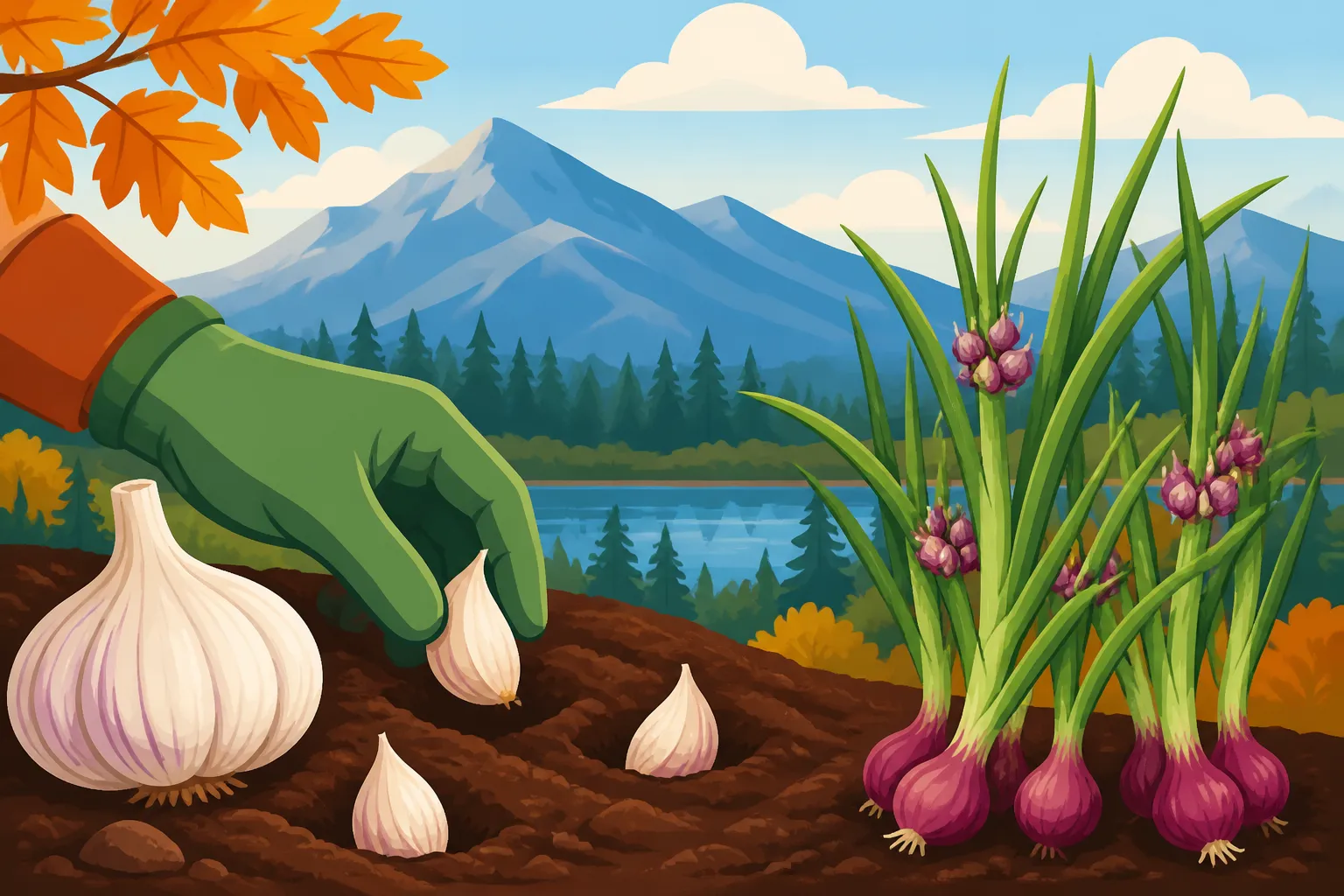
When to Plant Fall Garlic and Walking Onions in Kootenai County
Kootenai County gardeners often want a clear date for planting fall garlic and walking onions, but a single calendar day cannot account for wet soil, local cold pockets, or changing autumn weather. Use the season and the condition of your garden bed to guide the work. This article explains how to time planting, choose a site, and care for both crops without treating them as interchangeable.
When to plant fall garlic in Kootenai County
According to the University of Idaho Extension, plant garlic in fall and harvest bulbs in mid-summer. That seasonal guidance is more useful than relying on a fixed date: autumn weather and garden conditions vary, even within the same area.
For a practical decision, look at the soil and the forecast together. The bed should be workable rather than waterlogged, and the cloves need time to settle before the ground becomes difficult to work. If a stretch of mild weather arrives, that does not guarantee winter has finished waiting. A warm spell can be followed by a sharp change, so avoid using a brief temperature rise as your only signal.
Your yard can differ from a nearby garden. A sheltered bed near a building may stay warmer than an exposed patch, while a low spot can collect cold air. Dense shade or poor drainage can also make a bed unsuitable even when the timing seems right. For more context, see Idaho Frost Timing and Growing Seasons: A Regional Overview and Understanding Freeze Risk Across Idaho Microclimates.
Use the season, not a date alone
A date on a planting calendar is a planning aid, not a promise that conditions are right. Before planting, check whether the soil crumbles when handled or instead sticks together in wet clumps. Working overly wet soil can compact it and leave a poor environment for roots. If the bed is too wet or frozen to prepare comfortably, wait for a better opening rather than forcing the job.
Local weather forecasts are useful, but they are not a guarantee. A forecast can help you avoid planting immediately before a spell of severe conditions, yet long-range predictions are uncertain. For a broader way to think about planting decisions when weather shifts, see Plant Now or Hold Off? Evaluating Sudden Freeze Risks in Idaho.
The goal is not to get garlic into the ground at the earliest possible opportunity. It is to plant into a prepared, well-drained bed during fall, while the soil can still be worked. If the usual window seems to have passed, check current regional guidance before making a last-minute decision; avoid assuming that a late planting will perform the same way as a timely one.
Treat walking onions as a separate crop
Walking onions are not simply garlic with a different name. They grow from small bulbs or sets and can produce clusters of small bulbs at the top of the stalk. When those topsets bend down and take root, the plant appears to “walk” across the bed. That growth habit affects where you put them and how much room you want them to occupy.
Their timing can depend on what you have: a rooted division, a small bulb, or a topset. The condition of the planting material matters, as does whether your soil is workable and drains well. If you are buying sets, use the seller’s planting directions as a starting point and check local conditions before planting. Do not assume that the guidance for garlic applies identically to walking onions.
A fall planting may suit a gardener who wants to establish a perennial patch, but it should be planned around the particular planting material and the bed’s drainage. If you are unsure whether a set is in good condition, or whether a late planting is sensible, ask the seller or a local garden resource for advice rather than relying on a general calendar date.
Choose the site and prepare the bed
The best timing cannot make up for a poorly chosen site. Garlic and walking onions both benefit from a garden area that drains well and receives plenty of light. A wet bed can stay cold and saturated, conditions that are unhelpful for bulbs and roots. Before planting, notice where water tends to stand after rain or snowmelt. A bed that repeatedly remains soggy is a poor choice unless you can improve its drainage.
Sun exposure matters too. Compare the intended location with the rest of your yard through the day, rather than judging it from a quick glance. Nearby trees, fences, or buildings may cast more shade than expected. A protected spot can be useful, but protection should not come at the cost of poor light or trapped moisture.
For help with layout and site selection, see Vegetable Garden Bed Placement: Sunlight, Access, and Heat and Where to Place Raised Beds for Sun, Water Access, and Shelter. If the soil is dense or difficult to work, How to Improve Hard, Compacted Idaho Soil for Better Planting offers further considerations.
Check drainage before you plant
A bed that drains freely is easier to prepare and less likely to leave bulbs sitting in persistently wet soil. Look for puddles that linger, compacted areas, and places where runoff collects. If the site has a history of standing water, choose a different spot or address the drainage issue before planting.
Avoid making a major soil change based only on a guess. Soil texture and drainage are related, but they are not the same thing: a bed can look loose at the surface while holding water below. If you need to understand the soil more clearly, Testing Soil Texture Before Planting in Idaho Clay can help with the assessment.
Prepare the bed when its moisture level allows you to work without smearing or compressing the soil. Clear competing weeds and debris, then loosen the planting area in a way that does not leave it lumpy or compacted. If you add compost or another amendment, use a product intended for garden soil and follow its directions. Avoid applying fertilizer simply because bulbs are being planted; a soil test or locally appropriate advice is a better basis for deciding whether the bed needs nutrients.
Plan the space for the crop’s habits
Garlic is usually grown in a designated patch that can be managed through the growing season. Walking onions may be better in a permanent bed or border if you want them to return and spread. Their topsets can root where they land, so consider whether that movement is welcome before placing them near a path, a tightly organized vegetable bed, or another crop that needs a fixed boundary.
Think about access as well as plant growth. You will need room to weed, check the bed, and harvest without stepping on the planting area. A location near a convenient path can make routine care easier. On the other hand, an edge that is difficult to maintain may let weeds establish among the bulbs.
If you grow several alliums, keep the planting areas identifiable. Labels help distinguish garlic from onion sets, especially when foliage is young or when the bed is shared with other crops. A simple sketch can also help you remember where each type was planted after the bed is covered with mulch.
Plant garlic and walking onions carefully
Once the site is ready, handle the planting material gently. For garlic, separate the bulb into individual cloves close to planting time, keeping the protective skin intact where possible. Use firm, healthy cloves and set aside cloves that are damaged, soft, or showing signs of decay. A large, sound clove is generally a better starting point than a small or compromised one.
Plant cloves with the pointed end facing up and the root end down. Cover them with soil and firm the surface gently so the cloves are held in place without packing the bed hard. For spacing and planting depth, follow the instructions that came with the garlic or advice specific to the variety. Exact needs can differ, and there is no benefit in guessing a measurement simply because a generic chart gives one.
Garlic sold for eating is not always the best planting stock. It may have been treated or stored in a way that makes it less dependable for planting, and its suitability can vary. Choose stock intended for planting when possible, and check with the seller about its handling and suitability for your area. For more on local planting considerations, see Fall Garlic Planting Timing for Idaho Home Gardens.
Place walking onion bulbs and topsets with their future growth in mind
Walking onions can be established from small bulbs, divisions, or the topsets they produce. Set each piece into prepared soil according to the directions for that specific material. The bulb or set should be settled into the bed securely, without being forced into soil that is too wet or hard to work.
For topsets, decide whether you want them to take root where they fall or prefer to control their location. If you want a tidy patch, plant them where future growth will be welcome and keep the area easy to weed. If you would rather prevent spread, remove topsets before they root or collect them for another planting spot.
When using divisions from an established clump, keep the roots from drying out while you prepare the bed. Replant them promptly and water the soil enough to settle it around the roots, without leaving the area saturated. If the material arrives dry, damaged, or with unclear planting directions, ask the supplier how it should be handled.
Keep the two crops distinct
Both crops belong in a well-drained, sunny site, but the way you manage them can differ. Garlic is typically treated as a planted crop with a planned harvest. Walking onions can become a continuing patch that produces new planting material and spreads if topsets are allowed to root. Their labels, bed locations, and harvest plans should reflect those differences.
Do not crowd either crop just to fit more into a small bed. Crowding can make weeding harder and can reduce airflow around plants. Use the spacing and depth recommended for the stock you have, and leave access for maintenance. If your supplier provides no useful directions, seek local advice before planting rather than copying measurements from a different variety or climate.
For a wider look at onion and allium planting in the region, see Planting Onions and Alliums Ahead of Freezing Ground in North Idaho. For broader spring timing across crop types, Idaho Vegetable Sowing Guide: Spring Timing for Cool and Warm Crops can help you plan the rest of the garden without confusing fall bulb planting with spring sowing.
| Crop | Planting material | Main planning consideration |
|---|---|---|
| Garlic | Individual cloves from a sound bulb | Prepare a well-drained bed and follow directions for the planting stock |
| Walking onions | Small bulbs, divisions, or topsets | Decide whether you want the patch to spread or remain contained |
| Both | Healthy planting material | Keep the bed identifiable, accessible, and free of standing water |
Care for the bed through winter and into harvest
After planting, the aim is to protect the bed without making it soggy or difficult to inspect. A layer of mulch can help moderate soil conditions and reduce weed pressure, but the material should not be packed into a wet, airless mass. Choose a clean mulch suitable for garden beds, apply it according to local recommendations, and check how it behaves after rain or snow. If it stays saturated or mats tightly, adjust it so the bed is not smothered.
Do not judge success by whether foliage appears during a mild spell. Weather can shift, and a brief period of growth does not tell you the whole story. Avoid digging up planted cloves or sets to check on them; disturbance can damage roots and undo the work of planting. Instead, mark the bed and monitor it when conditions allow.
Winter protection varies by exposure and drainage. A sheltered garden may need less intervention than an exposed site, while a bed where water collects may need attention to drainage rather than extra cover. If you are considering a cover, use one intended for garden use and check that it will not trap moisture against the planting area. Regional guidance in Short-Season Gardening in Idaho: Calendar Strategies for Cold Ground can help put seasonal planning in context.
Manage weeds without disturbing bulbs
Weeds compete for space and can make it hard to see what is growing. Remove them carefully, especially while the crop is establishing. Shallow hand-weeding is often less disruptive than aggressive digging near bulbs. If you use a hoe or other tool, keep it clear of the planting line and avoid cutting into the soil deeply around the crop.
Mulch can reduce some weed pressure, but it does not eliminate the need to check the bed. Pull weeds while they are small and the soil is workable. If weeds have become established among walking onions, work around the bulbs rather than trying to clear the entire clump in one forceful pass.
For garlic, keep track of where the rows or planting groups are located. The same is useful for walking onions if the patch is mixed with other plants. Clear labels and a basic bed map can prevent accidental damage during routine weeding.
Watch water and plant condition
Rain and snow may supply enough moisture at times, while a sheltered bed or a dry spell may leave the soil short of water. Check the soil rather than watering on a rigid schedule. Water deeply enough to moisten the root area when the bed is dry, then allow excess water to drain. Avoid keeping the planting area constantly wet.
Look for changes in foliage and general plant condition, but do not assume every yellowing leaf has the same cause. Poor drainage, plant age, disease, and normal seasonal changes can look similar. If the problem is spreading or the bulbs appear to be rotting, compare symptoms with reliable local guidance before applying a treatment. Follow the product label for any pesticide or fertilizer you use.
Garlic harvest depends on the crop’s development, not only on a calendar reminder. Handle bulbs gently as you lift them, and let them dry in a sheltered place with good airflow if you intend to store them. Walking onions can be harvested as needed for their greens or bulbs, while some topsets can be saved for replanting. Check that the plants are healthy before saving planting material, and avoid keeping soft or damaged bulbs.
Frequently Asked Questions
Can I use a fixed calendar date for fall garlic?
A date can help you plan, but it cannot account for wet soil, cold pockets, or a changing forecast. Use fall as the seasonal cue and check whether the bed is workable and drains well.
Are walking onions planted exactly like garlic?
No. Garlic is planted from cloves, while walking onions may be planted from bulbs, divisions, or topsets. Follow directions for the planting material you have and plan for the walking onion’s tendency to spread.
Should I plant if the bed is waterlogged?
Wait until the soil is workable. Planting into saturated soil can make the bed harder to manage and may leave bulbs in poor conditions. If the site remains wet, consider a better-drained location.
Can I keep walking onions from spreading?
You can manage where they grow by collecting topsets before they root or planting them in a contained area. Check the patch regularly so new growth does not establish in a spot where you do not want it.
Sources
- University of Idaho Extension (checked November 15, 2026)
Disclaimer
This article is for general informational purposes only and does not constitute professional advice. Laws, prices and regulations vary by location and change over time. Consult a qualified professional for guidance on your specific situation. Idaho Gardening Guide is not a government agency and is not affiliated with any university extension, state department of agriculture or other government agency.