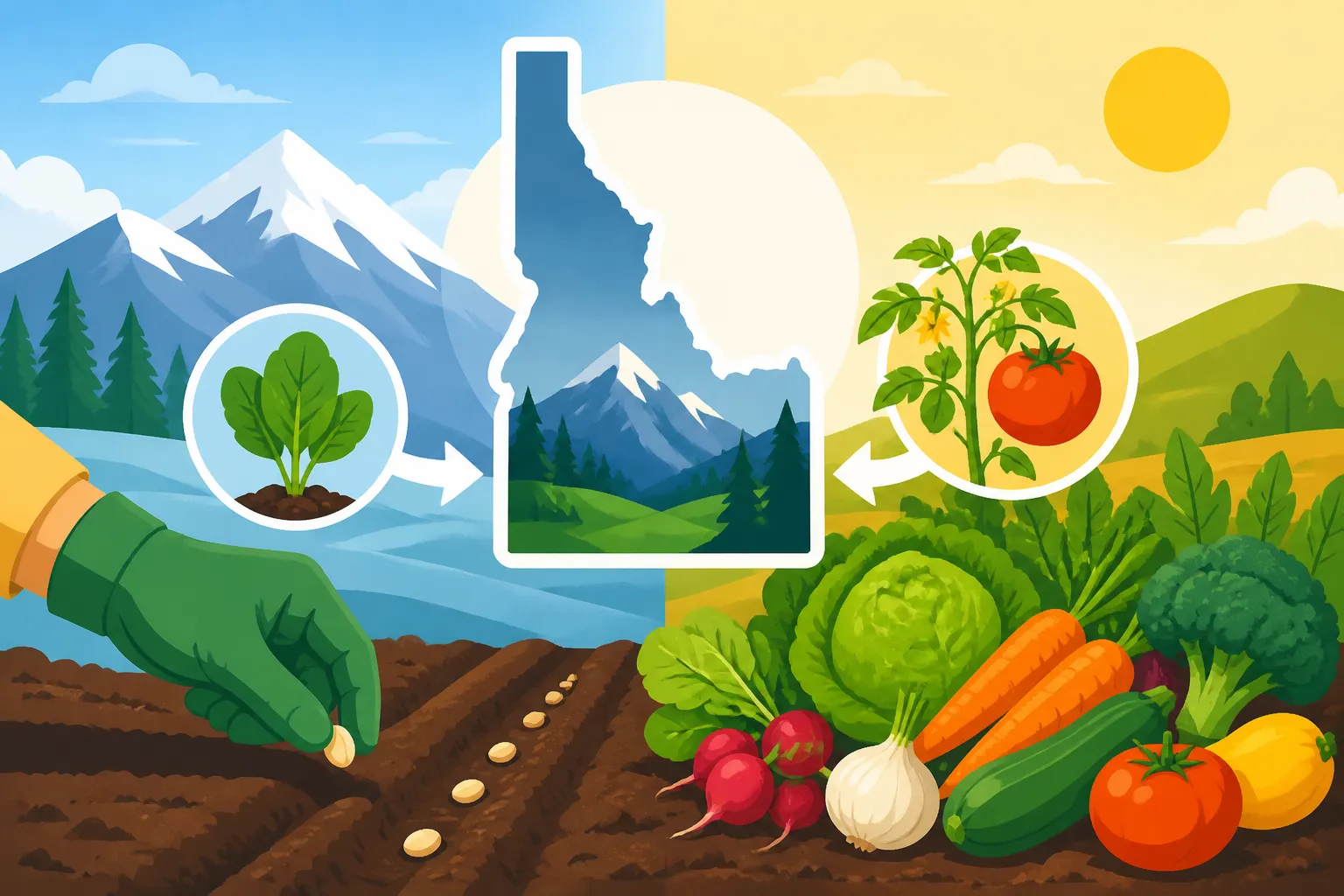
Idaho Vegetable Sowing Guide: Spring Timing for Cool and Warm Crops
Idaho spring can shift from workable garden soil to a cold snap, while different parts of the state warm at different speeds. That makes a single sowing date unreliable. The practical solution is to sort crops by cold tolerance, then use local frost risk, soil conditions, and the seed packet to decide when to sow or transplant.
Start with Idaho’s spring planting guide, then localize it
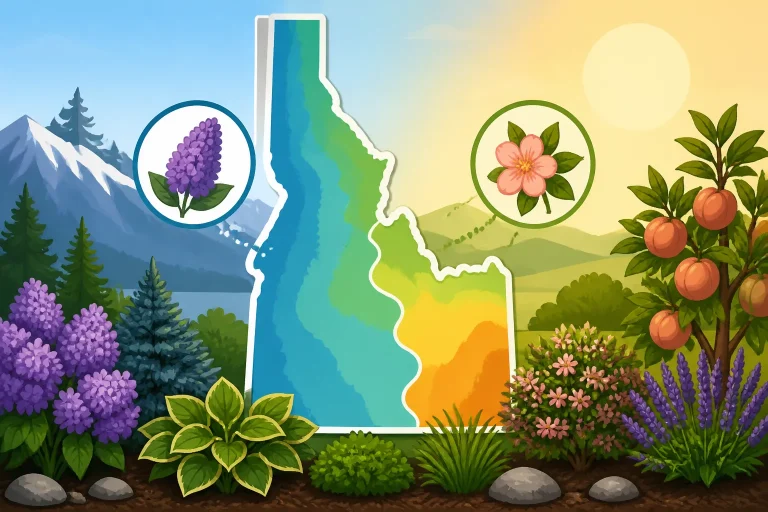
A statewide planting guide is a useful starting point, not a promise that every garden is ready on the same day. Idaho’s elevations, valleys, slopes, and neighborhood microclimates affect how quickly beds warm and how long frost remains a concern. A sheltered garden in a warm urban area may be ready before a colder site nearby, even when both gardeners consult the same calendar.
University of Idaho Extension’s guide is titled Spring Vegetable Planting Guide for Idaho. According to University of Idaho Extension, it includes planting date ranges for cool-season and warm-season crops. Use those ranges as a planning framework, then compare them with conditions at your own garden and the instructions on your seed packet.
A calendar range helps answer “when is this crop usually considered?” It cannot tell you whether your soil is workable after a wet spring, whether a low spot will collect cold air tonight, or whether a warm spell is likely to end abruptly. Those are on-site decisions. For a broader view of timing, see Idaho Frost Timing and Growing Seasons: A Regional Overview and Understanding Freeze Risk Across Idaho Microclimates.
Gather the information that actually affects your bed
Before choosing a sowing date, check a few things that can change the decision:
- Your local frost pattern. Look for information from a nearby weather station rather than relying only on a broad regional average. A station in a different elevation or valley may not reflect your garden.
- The current forecast. Average frost timing describes a pattern, not a guarantee. A forecast helps you respond to the immediate risk, especially when tender seedlings are already outside.
- Soil condition. Soil that is saturated, cold, or clodded is difficult to sow into and can delay emergence. Wait until the bed is workable rather than treating the calendar as a deadline.
- The crop’s cold tolerance. Leafy and root crops generally handle cool conditions better than vegetables that need warmth. The distinction is more useful than treating all spring vegetables as one group.
- Your site. Sun exposure, wind, nearby walls, slope, and drainage can all change how quickly a bed warms or cools.
- The seed packet. Check whether the crop is intended for direct sowing, indoor starting, or transplanting, along with its specific depth and spacing instructions.
You can find local frost information through weather-station data and local forecasts. Finding Freeze Dates for Your Nearest Local Idaho Weather Station explains why choosing a relevant station matters. Keep in mind that frost dates are probabilities, and the date varies from year to year.
Treat a planting range as a decision window
A range is more helpful than a single date because it leaves room for local conditions. Early in the window, a gardener might sow a cold-tolerant crop into a bed that has become workable. Later in the window, another gardener at a colder or wetter site may be making the same decision. Neither needs to force planting simply to match a calendar.
A practical approach is to plan in stages. First, identify the crops that tolerate cool conditions. Then note which crops need more warmth and should wait. Finally, revisit the plan as the weather and soil change. Idaho Vegetable Planting Calendar: What to Sow and When can help connect the spring decision to the rest of the growing season.
A garden plan should be flexible enough to absorb a delayed spring. If the bed is not ready, a missed early sowing window is usually a reason to adjust the plan, not to work wet soil or expose tender seedlings to avoidable stress.
Separate crops by what they can tolerate
The most useful spring distinction is between cool-season and warm-season crops. Cool-season crops are better candidates for early sowing because they can grow under cooler conditions. Warm-season crops are more vulnerable to cold and generally benefit from waiting until the garden has warmed.
This division does not mean that a cool-season crop enjoys every cold snap or that a warm-season crop is safe as soon as the daytime weather feels pleasant. It helps set priorities. Cool-season crops can often begin the spring plan; warm-season crops call for more patience and closer attention to nighttime conditions.
| Spring crop group | Typical approach | Main concern | Useful decision cue |
|---|---|---|---|
| Cool-season crops | Sow outdoors when the bed is workable, or start indoors if the crop and packet support it | Cold, wet soil and poor emergence | Soil condition and the crop’s stated tolerance |
| Warm-season crops | Start indoors when appropriate or wait to sow outdoors until conditions are warm enough | Frost and chilly soil | Local frost risk, soil warmth, and packet instructions |
| Transplants of either group | Set out only when the plant is ready and outdoor conditions suit it | Transplant shock, wind, and sudden cold | Hardened plants and a suitable forecast |
| Succession sowings | Repeat sowing when the crop and season allow | Uneven harvests or a planting gap | The crop’s maturity guidance and remaining season |
The table is a planning aid, not a substitute for crop-specific instructions. Individual varieties can differ, and a packet may recommend a method that does not fit every crop in its broader group.
Cool-season crops can lead, but the soil still matters
Cool-season crops are often the first vegetables to consider in spring. That does not make them suitable for mud, compacted ground, or a bed that freezes repeatedly. A seed needs favorable conditions around it to germinate and establish. If soil sticks heavily to tools or forms wet clumps, wait until it can be prepared without damaging its structure.
Some gardeners sow cool-season crops directly in the bed. Others start certain crops indoors and transplant them, especially when they want to protect young plants from weather or manage limited garden space. The right method depends on the crop and its seed instructions. Direct Sowing vs Indoor Seed Starting for Idaho Gardens compares the trade-offs.
Warm-season crops need more than a sunny afternoon
A warm spell can make a garden feel ready before it is. Warm-season vegetables may be damaged by frost, and cold conditions can slow them even when no frost occurs. Holding these crops until the site has genuinely warmed is often a better choice than planting them early and trying to rescue them afterward.
The decision is especially important for transplants raised indoors. They may look vigorous, but they have not yet adjusted to direct sun, wind, and outdoor temperature swings. A gradual transition helps reduce the shock of moving them outside. Read Why Warm-Season Vegetables Need Warm Soil, Not Just Frost Dates for a closer look at the difference between frost risk and soil readiness.
Choose between direct sowing, indoor starting, and transplants
Spring timing is not only about the day a seed goes into the ground. It also depends on how the crop is started. Direct sowing, indoor seed starting, and buying or raising transplants each have advantages and limitations.
| Method | Best fit | Advantages | Trade-offs |
|---|---|---|---|
| Direct sowing | Crops that establish well in garden soil and are suited to outdoor sowing | Simple, avoids transplant disturbance, and does not require indoor space | Seeds face outdoor soil and weather conditions directly |
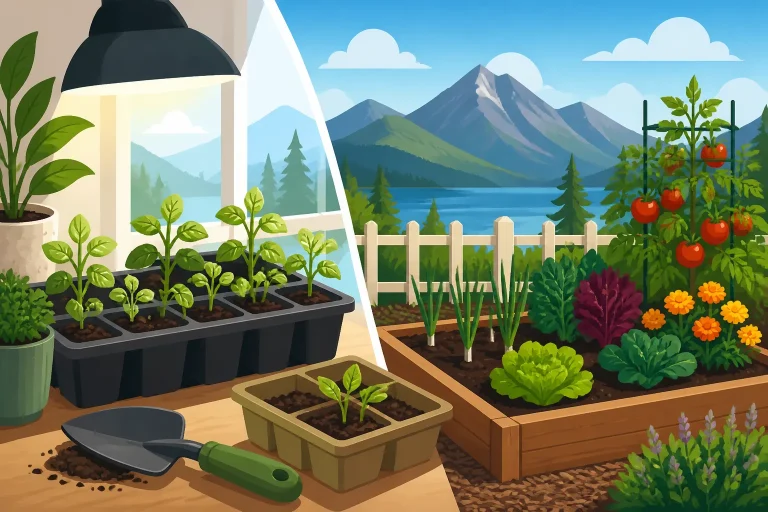
| Indoor seed starting | Crops that benefit from an indoor start and can handle transplanting | Gives the gardener control over early growth and protects seedlings from outdoor conditions at first | Requires light, space, attention, and a gradual transition outdoors |
| Transplanting | Crops started indoors or purchased as young plants | Plants can enter the bed already established | Plants can be set out too early, stressed by handling, or damaged by weather |
Do not assume that starting every vegetable indoors gives it a useful head start. Some crops do better when sown directly, while others can benefit from transplanting. A seed packet is the most specific guide for the variety in hand. Starting Vegetable Seeds Indoors for Northern Idaho Seasons and Starting Warm-Season Seedlings Indoors and Hardening Them Off offer more detail on indoor timing and the move outside.
Direct sowing: wait for a workable bed
Direct sowing makes sense when the crop is suited to the method and the soil can be prepared without smearing or compacting it. Clear the bed, remove large clods, and follow the packet’s instructions for sowing depth and spacing. Keep the surface appropriately moist while seeds establish, without letting the bed become waterlogged.
Weather can complicate the process. A dry, sunny stretch may make the surface look ready while the soil beneath remains cold or wet. Conversely, a short cool period does not necessarily mean all sowing must stop. Look at the actual bed and the crop’s tolerance rather than responding to one warm or cold afternoon.
If a sudden freeze is forecast after sowing, the response depends on the crop, its stage, and the expected conditions. A cover may help with some risks, but it is not a guarantee. Using Frost Risk Odds to Decide When to Plant Outdoors and Which Idaho Garden Crops Need Row Covers During Spring Frosts? can help you assess the choices.
Indoor starting: plan for the transition, not just germination
Indoor seed starting creates a controlled beginning, but the seedlings eventually have to adapt to outdoor life. A seedling raised in sheltered conditions can be sensitive to direct sun, wind, and temperature changes. Moving it straight from indoors to a garden bed can cause stress even when frost is not expected.
Harden seedlings off gradually, following crop-specific guidance. This means introducing them to outdoor conditions in a measured way rather than leaving them outside without preparation. Protect tender seedlings from harsh wind and sudden exposure. If conditions remain unsettled, keeping them protected for longer may be safer than rushing to meet a calendar range.
Indoor starting also requires suitable light and a way to manage moisture. Seedlings that become stretched or weak indoors may struggle after transplanting. Keep the growing setup appropriate for the crop, and avoid crowding plants until they are difficult to handle. See Starting Warm-Season Seedlings Indoors and Hardening Them Off for more on preparing starts for outdoor conditions.
Transplants: healthy plants still need the right moment
A transplant that looks ready on a shelf or windowsill is not automatically ready for a garden bed. Check that it is sturdy, acclimated to outdoor conditions, and appropriate for the weather ahead. Set it into soil that is prepared for planting, then pay attention to wind, sun, moisture, and forecast temperatures as it settles in.
When a cold snap threatens after transplanting, protection may help, but it is better to avoid unnecessary exposure in the first place. Make a plan for coverings before the weather turns, and make sure any cover is appropriate for the plants and conditions. Protecting Transplants When False Spring Turns Freezing in Idaho covers the risks of setting plants out during an early warm spell.
Use frost risk, soil, and microclimate together
Frost timing is one important part of spring planning, but it is not a fixed date that makes every garden safe before it or unsafe after it. Averages describe historical likelihood, while actual weather varies. Use them as a planning signal and keep checking current conditions.
A forecast also cannot describe every small difference in a yard. Cold air can settle in low areas, while a slope or sheltered spot may behave differently. A bed beside a heat-retaining surface may warm faster than an open bed, but it can still be exposed to wind or a late cold night. Keep simple notes about where frost lingers and where soil warms first; those observations can improve future planting choices.
Read the garden, not only the calendar
Before sowing or transplanting, consider whether the soil is workable, whether the bed drains well, and whether the location is exposed. If the ground is too wet to prepare, waiting is usually wiser than digging into it. If a cold pocket is prone to lingering frost, treat it more cautiously than a nearby protected bed.
The crop matters as much as the location. A brief chilly period may be less concerning for a cool-season crop than for a tender warm-season transplant. On the other hand, a plant can be stressed by cold, wind, or wet soil even when it survives without visible frost damage.
A useful sequence is:
- Check the crop’s cold tolerance and sowing method.
- Look at the relevant local frost information.
- Review the current forecast, especially for nights.
- Check whether the bed is workable and draining.
- Consider the microclimate where the crop will grow.
- Decide whether to sow, transplant, protect, or wait.
This keeps the decision grounded in several conditions rather than one calendar entry. Plant Now or Hold Off? Evaluating Sudden Freeze Risks in Idaho offers a more focused way to think through an unexpected cold forecast.
Use covers as backup, not as permission to ignore risk
Row covers, cloches, and other protective measures can reduce exposure in some situations, but they do not make every planting choice safe. The amount of protection depends on the material, how it is installed, the weather, and the crop. Covers can also create other concerns, such as overheating during sunny weather or rubbing against plants in wind.
Have supplies ready before a cold night rather than improvising after plants are already exposed. Check the plants and cover during changing conditions, and remove or adjust protection when appropriate. Follow instructions provided with a product, and use crop-specific local advice when the forecast is severe or uncertain.
For sensitive crops, postponing planting is often a more reliable strategy than relying on a cover to compensate for unsuitable conditions. If the forecast is marginal, compare the cost of waiting with the risk of losing a transplant or delaying its recovery. Using Hot-Caps and Paper Covers on Cold Idaho Spring Nights discusses common temporary protection options.
Build a spring sowing plan that can change
A strong planting plan gives each crop a place in the season without locking the gardener into a rigid schedule. Start with the cool-season crops, then reserve space for warm-season vegetables once conditions improve. Keep a little flexibility for weather delays, gaps in germination, and crops that finish earlier than expected.
Make a crop-by-crop plan
Write down each vegetable and note its preferred starting method, cold tolerance, and packet guidance. Mark whether it is a direct-sown crop, an indoor-started crop, or a transplant. Then add a reminder to check the weather and bed conditions before acting. This is more useful than copying a single date onto every crop.
A simple planning table can look like this:
| Crop | Starting method from packet | Cool- or warm-season group | Bed or container | Condition to check before planting |
|---|---|---|---|---|
| Crop name | Direct sow, indoor start, or transplant | Cool or warm | Planned location | Soil, frost risk, or hardening |
| Crop name | Direct sow, indoor start, or transplant | Cool or warm | Planned location | Soil, frost risk, or hardening |
The table is a template, not a set of crop recommendations. Fill it in using the seed packet and a locally appropriate planting reference. If a packet gives specific instructions that differ from general advice, use the packet for that variety and seek local guidance if the instructions remain unclear.
Leave room for succession and recovery
Spring conditions can delay sowing, and some early plantings may fail to emerge evenly. Planning a possible repeat sowing can help avoid an empty bed, provided the crop and remaining season allow it. Do not assume a replacement sowing will mature in every situation; check the variety information and how much growing season remains.
For warm-season crops, a late start may have consequences for harvest timing, especially in a short growing season. It can be better to choose a crop or variety suited to the available season than to keep pushing a tender plant into cold soil. Short-Season Gardening in Idaho: Calendar Strategies for Cold Ground and Choosing Vegetable Varieties for Idaho’s Challenging Climate provide useful context for adapting the plan.
Keep notes on what was sown, where it went, and how it performed. Include observations about soil warmth, frost pockets, wind exposure, and germination. These notes can show whether a particular bed consistently becomes ready early or whether the same crop is better started indoors. The goal is not to produce a perfect calendar; it is to make next spring’s decisions less uncertain.
Use seed packets as crop-specific instructions
A seed packet can help answer practical questions that a broad calendar cannot. Check its guidance for starting method, sowing depth, spacing, light, and expected conditions. Different varieties of the same vegetable may have different growing characteristics, so avoid assuming that one packet’s instructions apply to every seed.
If you are comparing packets, record the variety and its instructions alongside the planting plan. Botanical Interests seed packets can be one source of variety-specific directions when you are choosing seeds; use the instructions for the particular crop rather than treating the brand as a substitute for local timing advice.
Pay attention to whether instructions refer to direct sowing or transplanting. A date range intended for outdoor sowing is not necessarily an indoor-starting schedule. Likewise, a plant started indoors needs time to adjust before it moves outside. If the wording is unclear, check the seed supplier’s crop guidance or ask a local gardening resource.
Avoid common spring timing mistakes
Many spring planting problems are not caused by choosing a date that is dramatically wrong. They come from treating a general date as a guarantee, overlooking the condition of the soil, or confusing a warm day with settled spring weather.
Planting everything at once
Different crops have different temperature needs. Sowing all vegetables in one weekend may seem efficient, but it can expose warm-season crops to cold while delaying the crops that tolerate cooler conditions. Group crops by their needs and spread planting decisions across the season.
Confusing frost-free with warm enough
A forecast without frost does not necessarily mean the soil is warm enough for a warm-season crop. Chilly soil can slow establishment, and cold nights can stress young plants. Consider both frost risk and the warmth of the growing area. Watching Soil Temperature Before Setting Out Summer Crops explains why soil conditions matter in addition to the forecast.
Working wet soil because the calendar says to plant
Wet soil can be damaged by digging, raking, or walking on it. A bed that is not workable may produce clods and compacted areas that make sowing harder. Wait for suitable soil conditions, then prepare the bed without overworking it.
Moving indoor seedlings outside too quickly
Seedlings can be accustomed to stable indoor conditions. Direct sun, wind, and changing temperatures may be a shock. Harden plants off gradually and watch the forecast. An indoor-grown plant is not necessarily more prepared for an early planting date than a direct-sown seed.
Assuming protection cancels out poor timing
Covers can be useful, but they do not remove all risk. A cover may not protect equally in every forecast, and it can require adjustment as conditions change. Consider whether waiting is safer, particularly for valuable or tender transplants.
Using one local frost date for the whole yard
A regional average cannot account for every slope, low spot, wall, or exposed garden. Check nearby weather information and observe your own site. If a particular bed repeatedly experiences colder conditions, plan around that pattern rather than relying on a warmer part of the neighborhood.
Treating a crop group as a guarantee
“Cool-season” and “warm-season” are useful categories, not precise promises about every variety or every weather event. Check the packet and use the plant’s actual condition as feedback. If a seedling appears stressed, diagnose the likely cause before assuming that its planting date was the only issue.
Frequently Asked Questions
Can I use a statewide planting range for my exact garden?
Use it as a starting point, then adjust for your local frost pattern, elevation, soil condition, and microclimate. A range is more useful than a single fixed day, but it cannot account for every yard.
Should I sow cool-season crops as soon as spring begins?
Not automatically. Wait until the soil is workable and follow the crop’s packet instructions. Cool-season crops tolerate cooler conditions better than warm-season crops, but wet or unsuitable soil can still interfere with establishment.
Is a warm afternoon enough to plant warm-season vegetables?
No. Check the forecast, nighttime conditions, and soil warmth as well as daytime air temperature. A brief warm spell does not necessarily mean the risk of cold has passed.
Should every vegetable be started indoors?
No. The right method depends on the crop and its instructions. Some vegetables are suited to direct sowing, while others can benefit from indoor starting or transplanting.
What should I do if a frost is forecast after planting?
Assess the crop, its growth stage, and the expected conditions. Use appropriate protection when it makes sense, or move containers to shelter if possible. For a tender crop in a high-risk location, waiting to plant can be safer than relying on cover.
Sources
- University of Idaho Extension (checked November 15, 2026)
Disclaimer
This article is for general informational purposes only and does not constitute professional advice. Laws, prices and regulations vary by location and change over time. Consult a qualified professional for guidance on your specific situation. Idaho Gardening Guide is not a government agency and is not affiliated with any university extension, state department of agriculture or other government agency.